
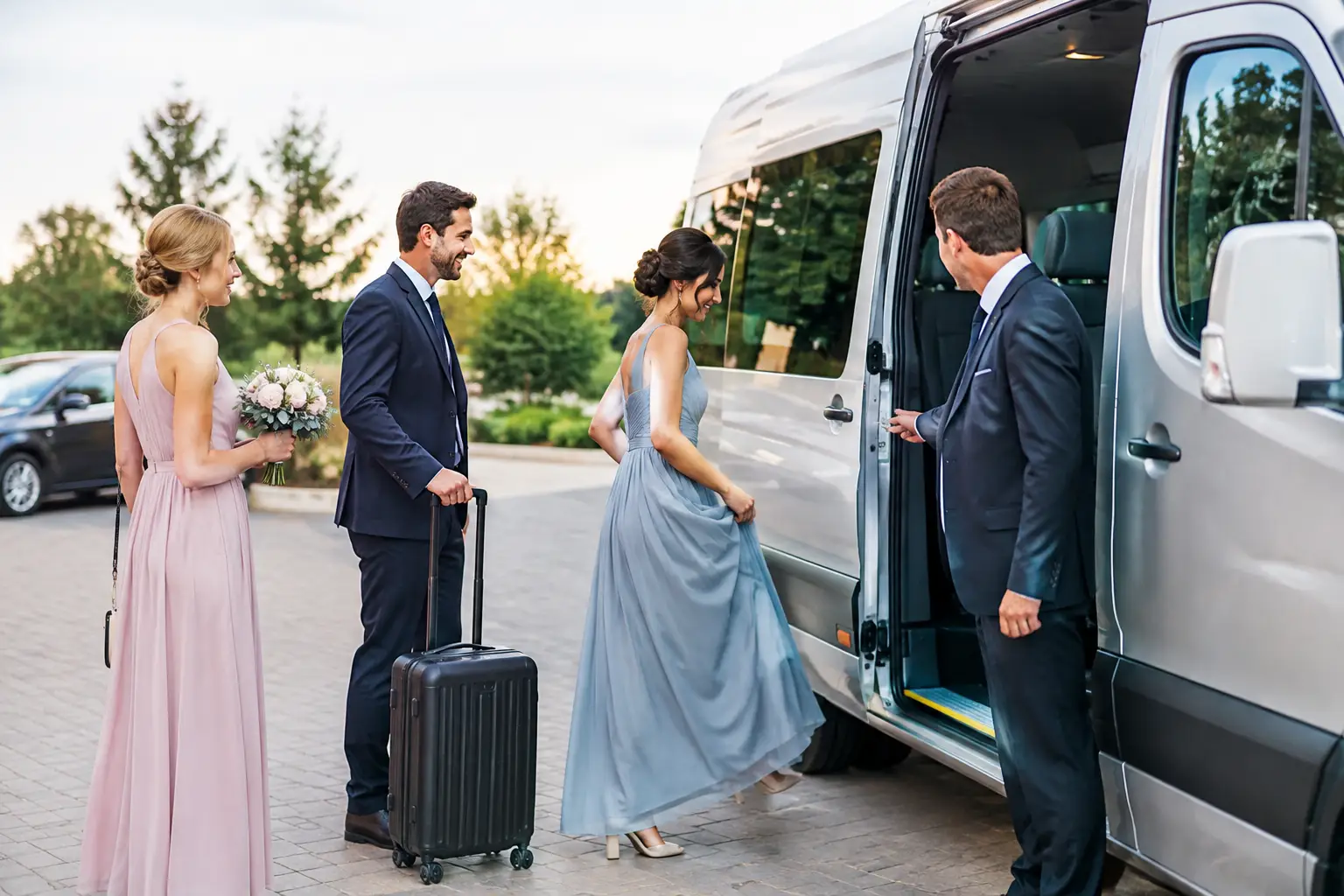
The ceremony may start at 2pm, but your guests’ experience begins much earlier. If relatives are unsure where to park, friends are relying on taxis at peak time, or someone has had a drink and cannot get home safely, those small worries can quickly become the day’s problem. To organise wedding guest transport properly, treat it as part of the celebration rather than a last-minute practical extra.
For weddings in and around Milton Keynes, a pre-booked, fixed-price transport plan gives everyone more certainty. Guests know where they need to be and when. You know who is responsible for the journey. Most importantly, your nearest and dearest can focus on being present for the day.
Start with the journeys that matter most
You do not necessarily need transport for every guest. The best plan is usually targeted: arrange it for the people whose journeys would otherwise be difficult, then give the remaining guests clear travel information well before the day.
Start by looking at your guest list alongside the venue locations. Parents and grandparents, anyone with limited mobility, guests travelling from a hotel, those arriving by train, and guests without a designated driver are often the priority. If the ceremony and reception are at different venues, that inter-venue journey should be at the top of the list too.
Think about the end of the evening as carefully as the beginning. A beautiful rural venue can be perfect for photographs but less straightforward after dark, particularly if local taxis are limited. Pre-booked return journeys mean guests are not left refreshing an app, facing surge pricing or wondering whether a car will arrive.
Consider the shape of your day
Write down every point at which people need to move. This might include hotel-to-ceremony transfers, a station collection, transport between the church and reception venue, and late-night journeys home. Add realistic timings, not just the advertised start time.
For example, guests travelling to a 1pm ceremony should normally be at the venue 20 to 30 minutes early. Build in extra time for photographs, traffic, parking restrictions and anyone who needs assistance getting in or out of the vehicle. A calm early arrival is always better than an apologetic late entrance.
Organise wedding guest transport around clear pick-up points
Collecting people one by one can turn a simple journey into a long and unpredictable route. Where possible, use one or two easy-to-find pick-up points, such as a hotel entrance, a railway station collection point or a nearby village hall car park.
A shared collection point works especially well for guests staying at the same hotel. Give a precise departure time and ask guests to be ready ten minutes beforehand. It is worth stating that the vehicle must leave on time for the ceremony. That is not impolite - it is fair to the people who have arrived promptly and to the couple waiting at the venue.
For older family members or guests with children, door-to-door transport may be the better choice. It costs more than a centralised shuttle, but it removes the pressure of getting to an unfamiliar meeting point. The right approach depends on your numbers, your budget and how spread out your guests are.
Share details in one simple message
Confusion usually comes from scattered information. Put the travel plan in one place: your wedding website, an email to guests, or a printed card included with invitations. Include the pick-up address, departure time, return arrangements, contact number for the transport provider and a note on what to do if someone is delayed.
If guests are arranging their own travel, still give them useful details. Name the nearest station, flag any limited parking, mention whether the venue has poor mobile signal, and make it clear if taxis need to be booked in advance. This helps people make sensible decisions without needing to chase you on the morning of the wedding.
Choose vehicles for comfort, not just capacity
A vehicle may technically have enough seats, but that does not always mean it is suitable. Consider luggage for hotel guests, pushchairs, formal outfits, mobility needs and whether passengers will be travelling for more than a few minutes. Comfortable, clean transport sets the right tone and helps guests arrive relaxed.
Ask about the exact vehicle and passenger capacity when you book. If several guests are travelling together, it may be more practical to arrange multiple vehicles at staggered times than to squeeze everyone into one larger option. For smaller parties, an executive car can be a thoughtful choice for parents, grandparents or a couple staying away from home.
Children need planning too. Confirm child-seat requirements early and ensure parents know what they need to provide or request. Do not assume a standard vehicle will carry a buggy, overnight bags and several passengers comfortably without checking first.
Book early and confirm the details
Wedding dates often fall on busy weekends, bank holidays and summer evenings, when availability can be tighter. Booking transport early gives you more choice and lets the provider reserve the right driver and vehicle for your timings.
When requesting a quote, provide the date, collection addresses, venues, passenger numbers, desired arrival times and any return requirements. Mention accessibility needs, child seats, large luggage or a route involving several stops. A detailed brief leads to an accurate price and fewer surprises later.
Fixed pricing matters here. You should know what the transport will cost before the day, rather than leaving guests or family members exposed to changing fares. Check whether waiting time, extra stops and late-night collections are included or charged separately. Transparent answers are a good sign that the service is organised and accountable.
A week or two before the wedding, reconfirm the final passenger list, mobile numbers and timings. Then send the essential details to the people travelling. This is also the moment to tell the driver about any practical details, such as a difficult venue entrance, a private road, or a guest who may need a little extra help.
Give one person responsibility on the day
The couple should not be taking calls about a missing guest or a delayed train while getting ready. Choose a trusted person - perhaps a member of the wedding party, a parent or the venue coordinator - to be the transport contact for the day.
They should have the driver’s details, the schedule and a list of passengers. Their job is not to manage every journey minute by minute. It is simply to be the sensible point of contact if a guest cannot find the pick-up location or an itinerary needs a small adjustment.
A professional pre-booked service should also take ownership of its side of the plan. At Full Circle Transfers, we believe wedding transport should feel personal, punctual and straightforward: licensed, DBS-checked drivers, clean comfortable vehicles and agreed prices before you travel. That gives organisers one less moving part to worry about.
Do not overlook late-night travel
The final hour of a wedding is where good planning really shows. Some guests will leave early, others will stay until the last song, and a few may need to change plans. You do not need to predict every decision, but you can create a safe framework.
Set a small number of return times, such as an earlier collection for older relatives and a final collection at the end of the reception. Tell guests that additional journeys may need to be arranged in advance. If alcohol is being served, encourage everyone to make a plan before the evening gets underway.
For guests travelling to hotels, confirm the hotel name and postcode rather than relying on a similar-sounding venue name. For journeys home, make sure addresses and phone numbers are correct before the day. It is a minor detail until it is 11.30pm in the rain.
A thoughtful journey is part of the welcome
Wedding guest transport is not only about getting people from A to B. It is a practical way of showing guests that you have considered their comfort, safety and time. A clear plan helps grandparents arrive without stress, lets friends celebrate without worrying about driving, and keeps the day moving at the pace you intended.
Set the timings early, communicate them simply and book with people who will treat your guests as people, not just another fare. Then, when the cars arrive, you can leave the logistics in capable hands and enjoy the moment everyone has come together to share.